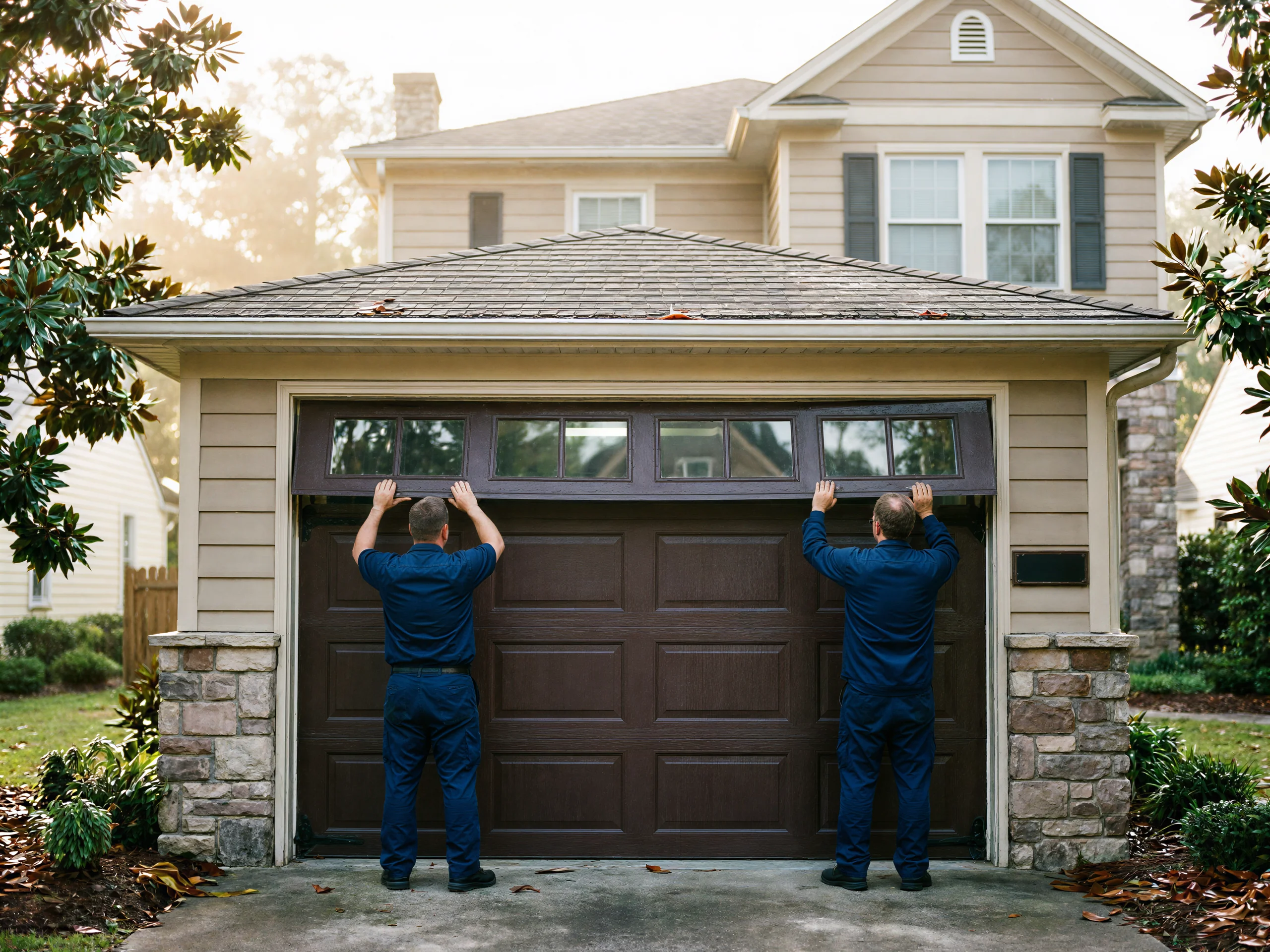
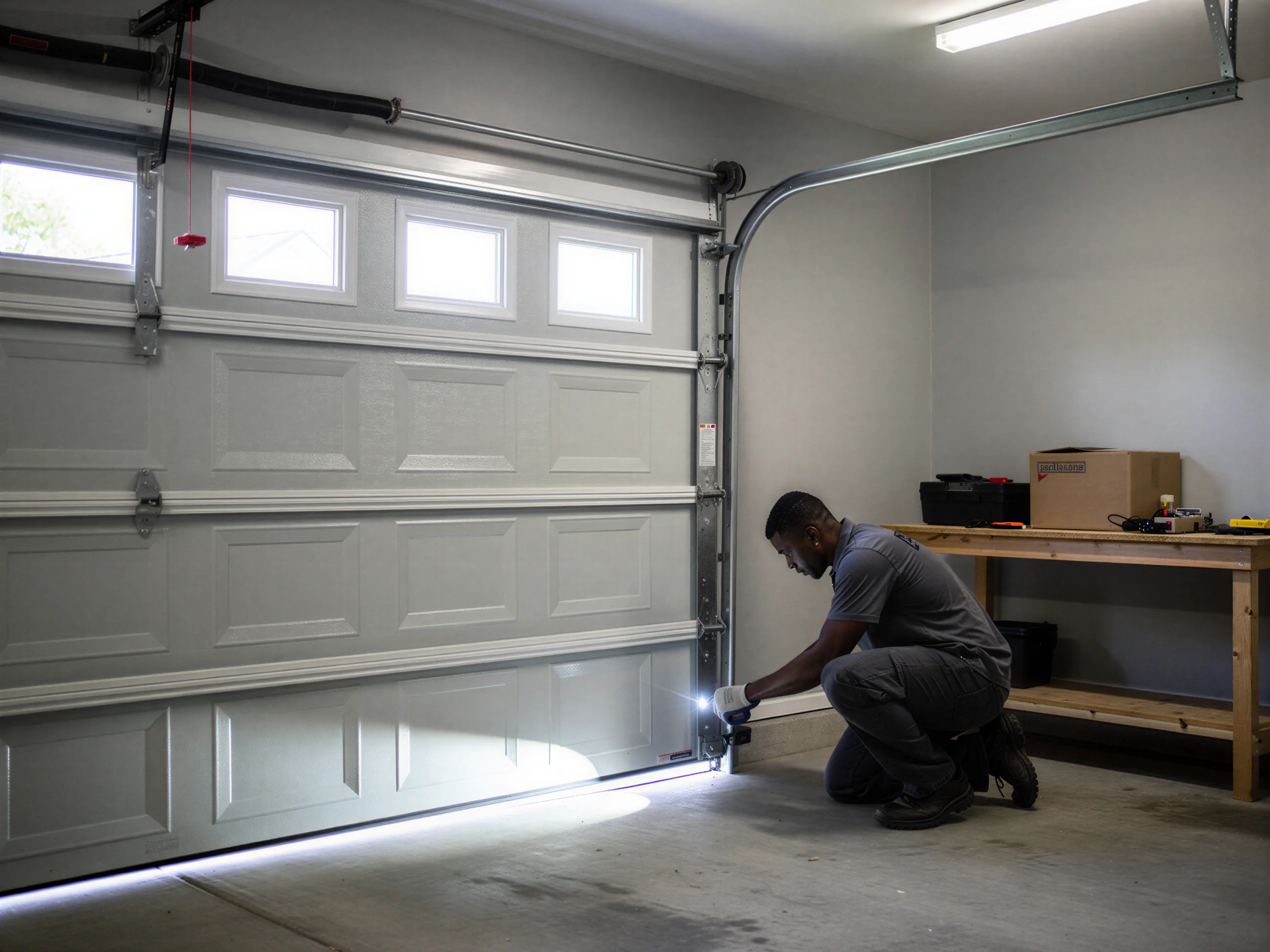
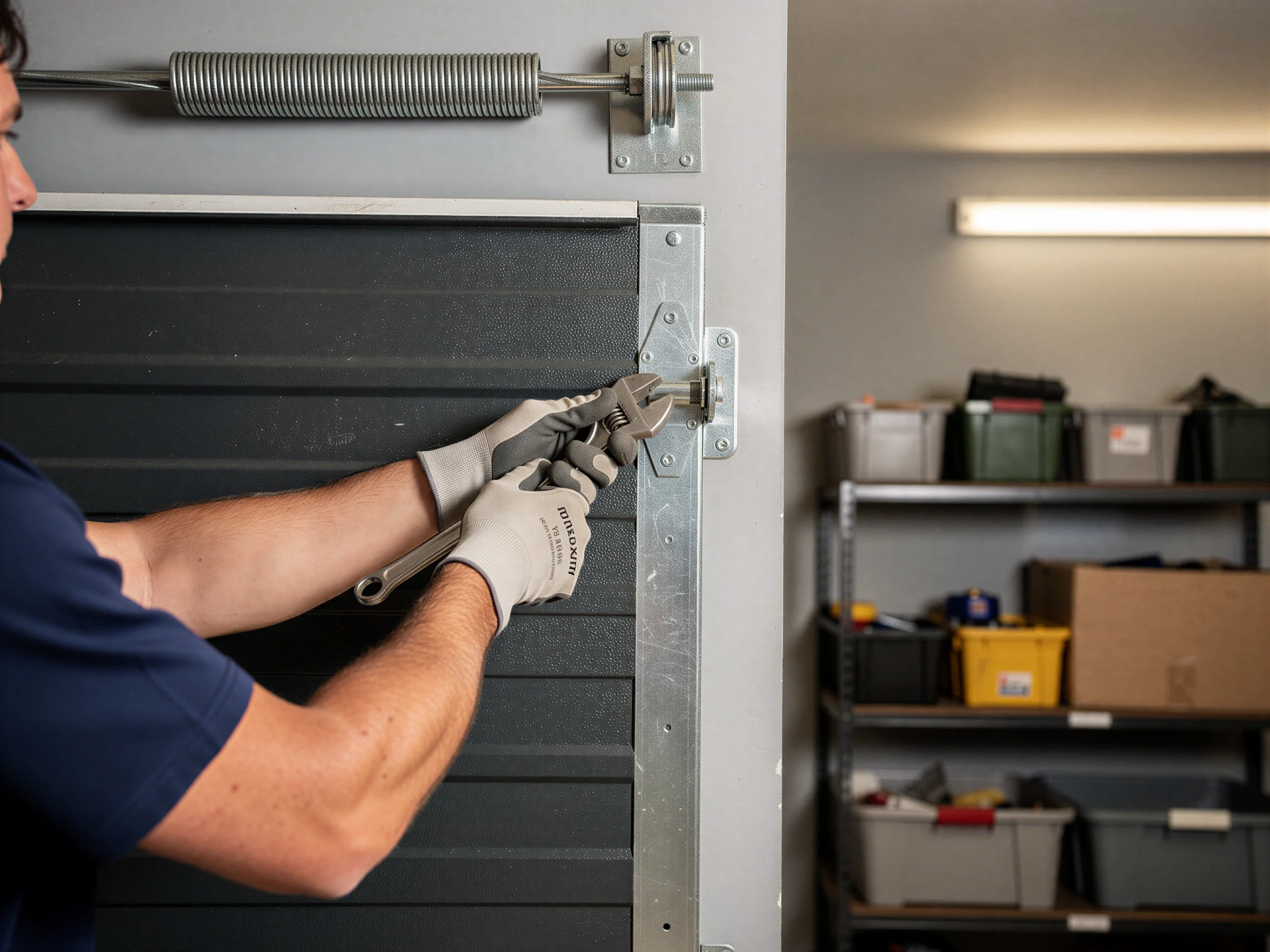
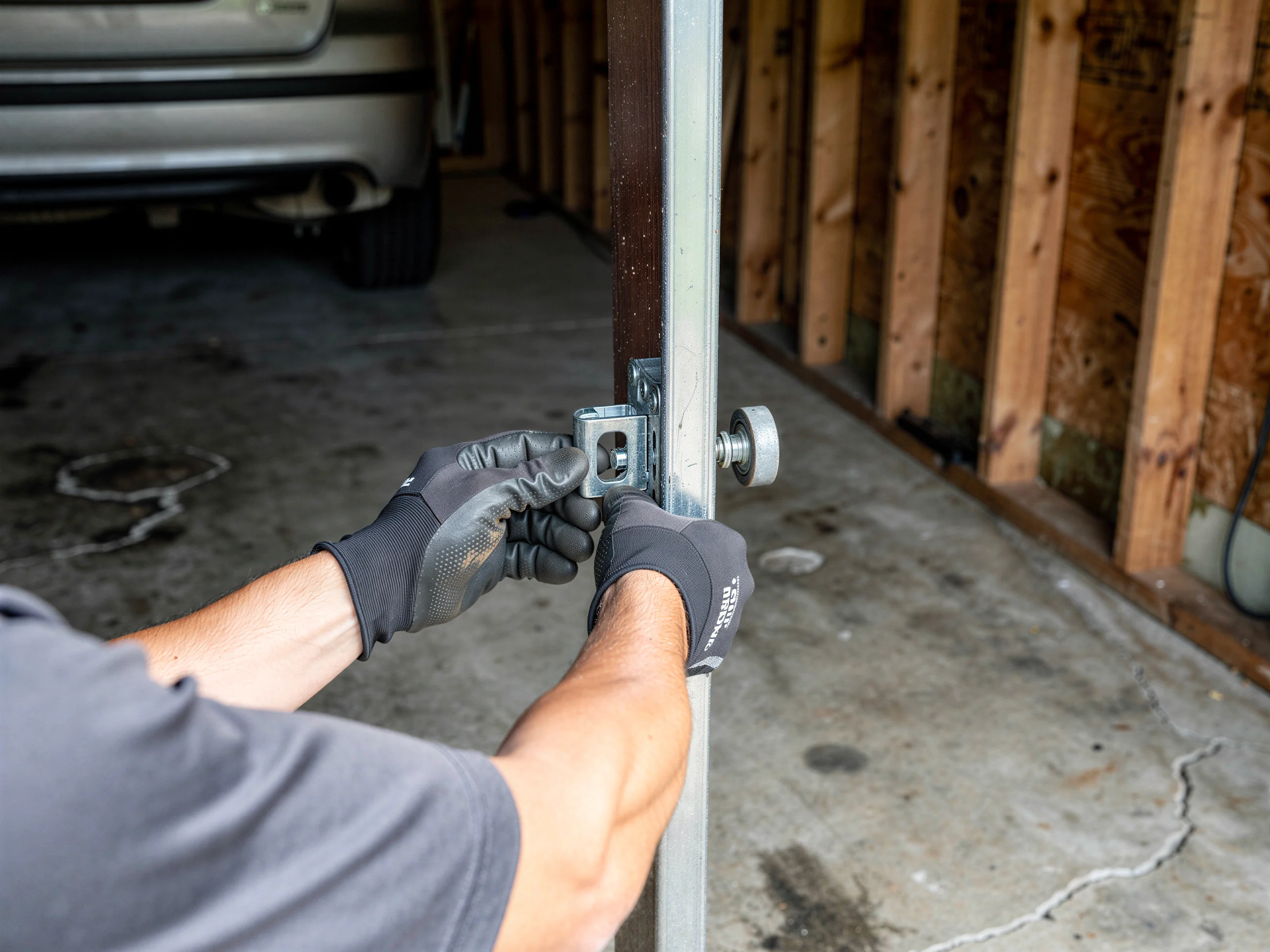
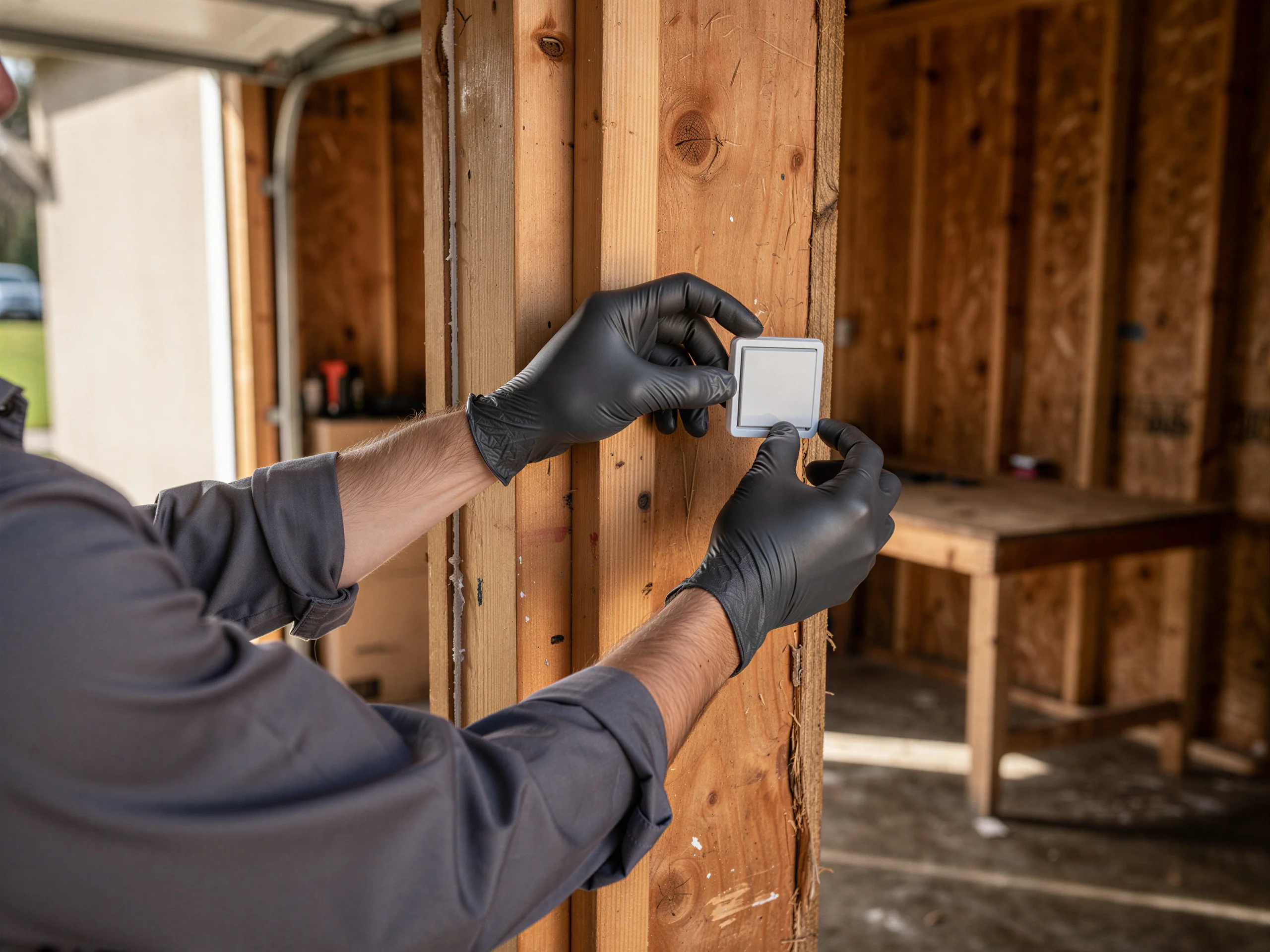
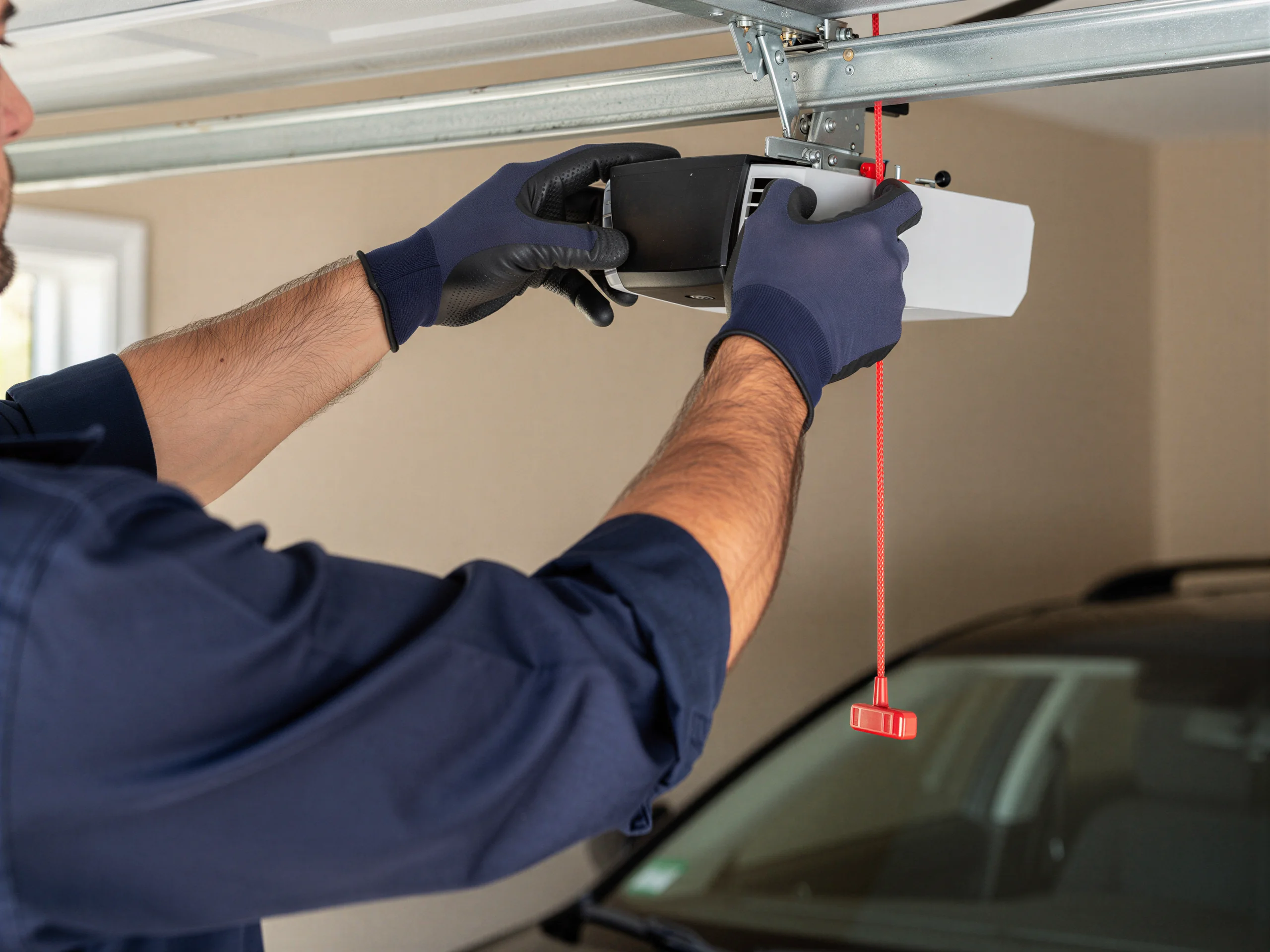
Across the broader service area, housing ranges from 1956 to 2008, with most stock from the 1980s and 90s. Leland sits at the newer edge of that range, and new-construction doors get installed to a price point, not a lifespan. Builders spec the cheapest steel panel and the cheapest opener that passes inspection, because the buyer is looking at the kitchen, not the garage. That's standard practice everywhere, but it means a 2008-era Leland door was never built to be a 20-year door in the first place. Add a mild coastal climate with occasional freeze and you get humidity cycling that works on steel seams and weatherstripping even without the deep freeze-thaw damage you'd see further north. It's slower deterioration, not sudden failure. The hardware doesn't snap - the track pulls fuzzy, the opener logic board drifts, the panel seams start to gap. By the time an owner calls, the door usually still runs, which is exactly why replacement conversations here are about upgrading before a failure rather than reacting to one.