What Is Going On
Every noise your door makes is a part telling you something specific, and the age of your house usually narrows down which part. Most homes in this service area went up between 1956 and 2008, with the typical one dating to 1994, and that puts a lot of original hardware right at the point where it starts complaining. A sharp bang when the door closes is almost always a torsion spring letting go, not the door itself failing. A rhythmic thump once per rotation means a flat spot on a roller or a bent track bracket. Grinding that gets worse over weeks, not days, is usually a worn bearing plate on the spring shaft. Popping as the door travels is loose hinges or a track out of alignment, which happens more on doors that have gone 20-plus years without the track ever being reset. None of these are the same repair, and none of them get better by waiting. The honest part: if your opener is also straining, clicking, or reversing on its own, that's a separate problem from the door hardware, and we won't tell you a lube job fixes an opener logic board issue. Tell us what the noise is and when it happens, and we can usually tell you what's wrong before we open the truck.
What It Costs
We're not going to put a number here that isn't yours, because the honest range depends entirely on which part failed and what's on your door now. A set of rollers is a different job than a torsion spring, and a spring on a double door is a different job than one on a single. What we can tell you is what drives the cost up in houses around here specifically: homes built in the 1994 range, which is the median for this area, often still carry their original hardware, and parts for 30-year-old doors aren't always a shelf item. If your door was installed before the mid-90s wave of construction that covers most of the 22 named communities we work in, there's a real chance we're sourcing a spring size or a track bracket that current big-box doors don't use. That adds a call to check stock before we quote you a firm number. We'd rather tell you that up front than guess low and revise later. A working door with a bad spring is almost always worth repairing. A door with a cracked panel, rotted bottom section, and a dying opener all at once is usually worth replacing outright, and we'll say so instead of patching three separate problems.
What the Weather Here Does to It
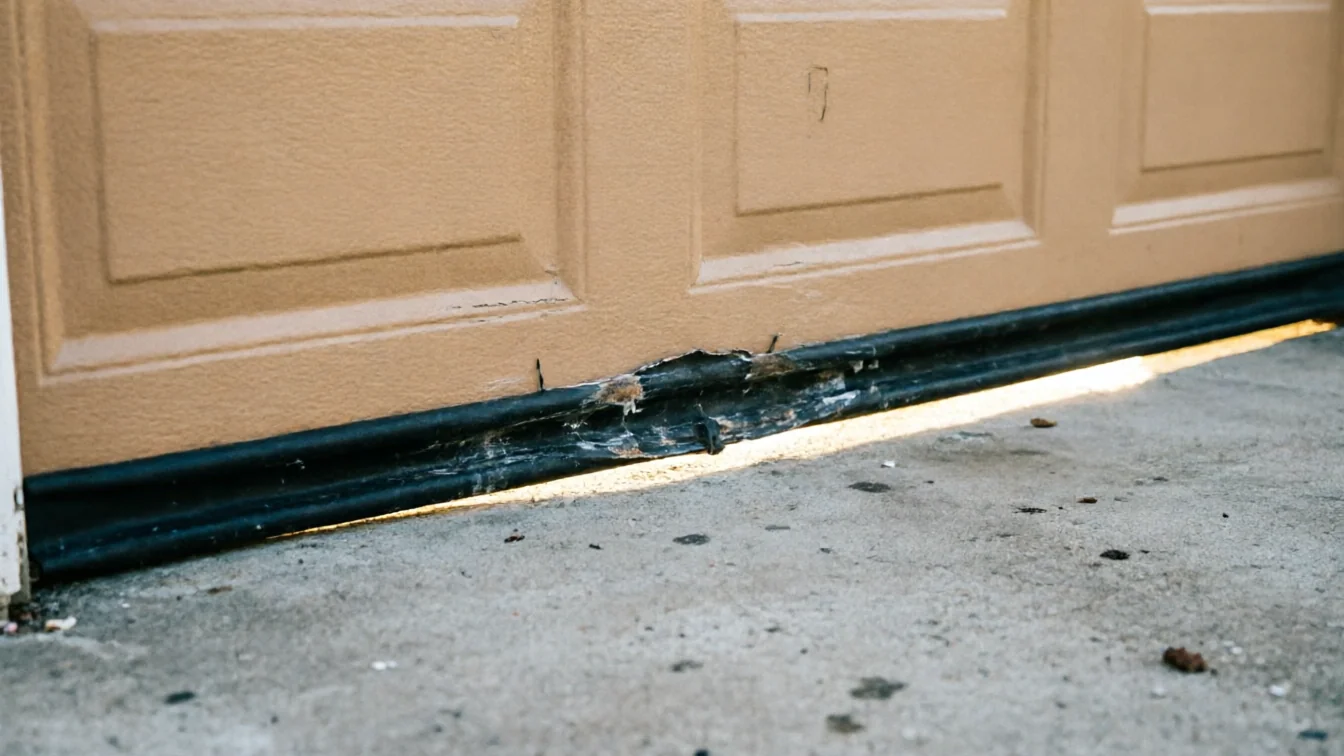
Wilmington sits in a mild climate band with occasional freeze, which is a different problem than the hard freeze-thaw cycling that wrecks doors further inland. We don't get the repeated ice-and-thaw cracking that splits weatherstripping and seizes hardware every winter. What we do get is humidity, salt air depending on how close you are to the coast, and long stretches of heat that dry out lubricant faster than a cooler climate would. That shows up as a specific set of noises: a squeal on the hinges that comes back within weeks of lubricating, surface rust on exposed springs and bolts on older steel doors, and tracks that develop a fine grit film that makes the rollers chatter. Houses closer to Wrightsville Beach or Carolina Beach see this faster than ones further inland, simply from salt exposure. None of this is dramatic weather damage like you'd get from hail or heavy snow load - our climate here is gentler on a door than most of the country. But it is a steady, low-grade wear pattern, and it means a door that sounds fine in spring can start grinding by late summer purely from dried-out hardware, not from anything breaking.
The Seasonal Bit
Because we don't get a real winter here, the seasonal pattern on garage door noise doesn't follow the freeze-thaw calendar you'd hear about in a colder state. What we see instead is a summer pattern: heat and humidity peak, lubricant thins out or dries off hinges and rollers faster, and that's when squealing calls spike. Houses built during the 1980s and 90s wave that makes up most of the housing stock across the 22 communities we cover tend to call in clusters during these months, because a lot of that hardware is aging out at roughly the same rate. There's also a shorter spike after any stretch of heavy rain, when a track that was slightly out of alignment finally lets a roller catch on wet debris. If your door started making noise right after a hot stretch or a run of storms, that timing isn't a coincidence - it's the two things our climate actually does to a door. A once-a-year lube and alignment check before summer catches most of this before it turns into a grinding bearing or a snapped spring.
Talk to a local pro
Garage door trouble in Wilmington?
Same-day service with honest, upfront quotes.