What Is Going On
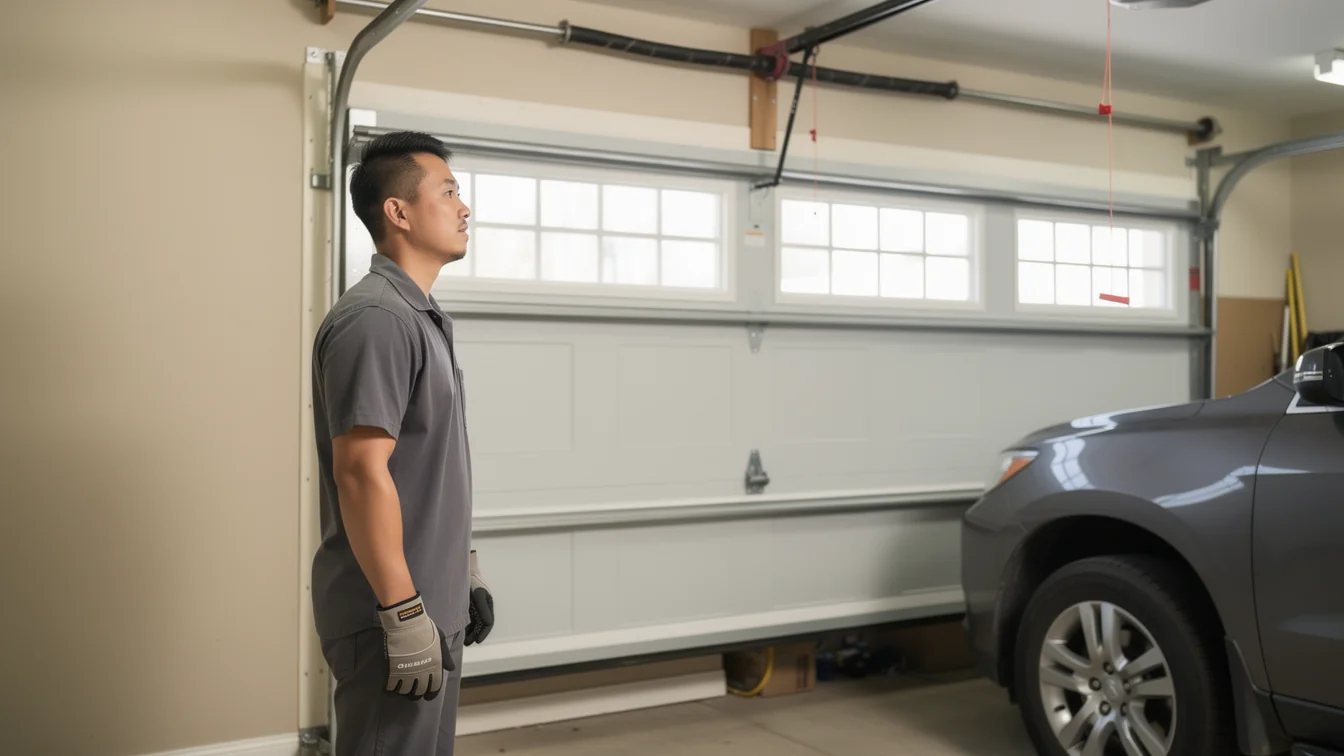
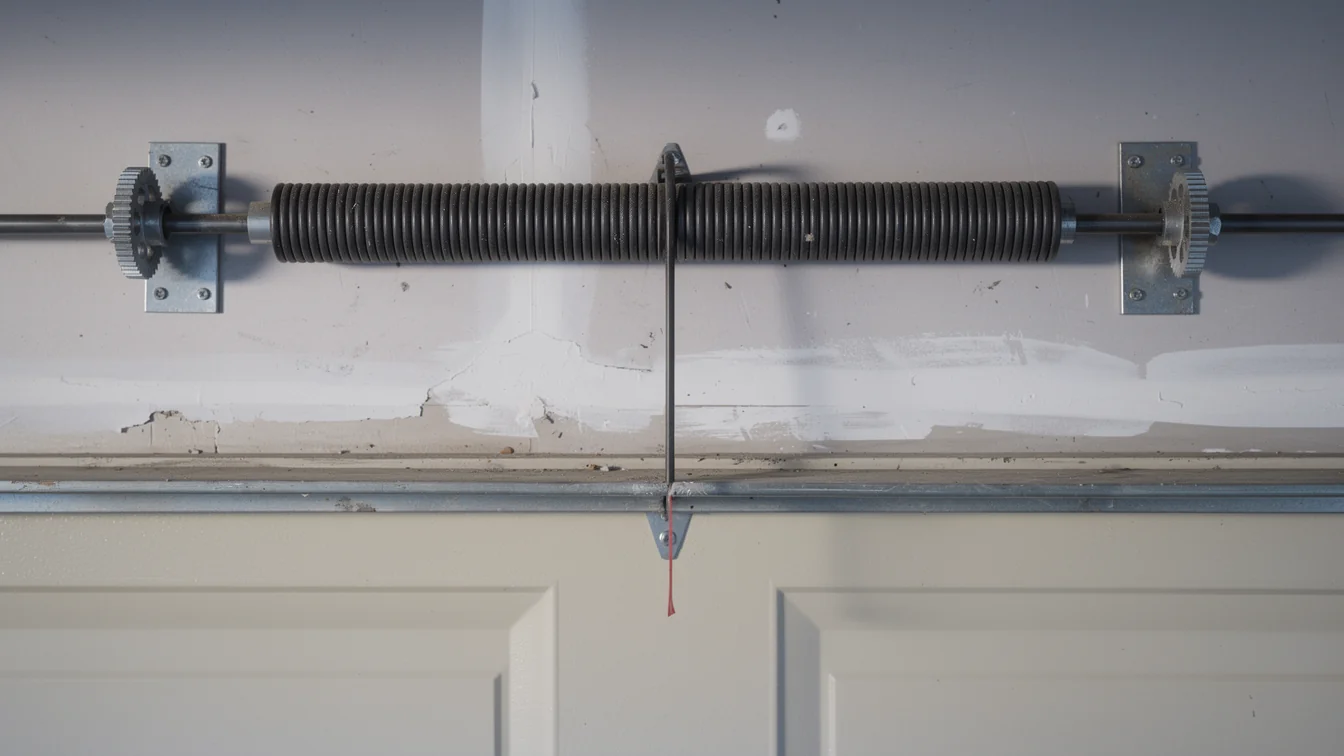
A torsion spring stores tension by twisting steel around a shaft above the door. Metal contracts when it's cold, and a spring that's already fatigued from years of cycling up and down loses a little flex right when it needs it most. That's why the call usually comes on the first genuinely cold morning of the season, not in the middle of a cold stretch.
Most houses in this service area went up between 1956 and 2008, with the bulk of that stock dating to the 1980s and 90s across the 22 named communities we cover - places like Pine Valley Estates just two miles southwest, out to Landfall five miles ENE, and further out toward Leland and Castle Hayne. A spring put in when a 1990s-built house was new has had three decades of cycles on it. That's the spring that goes on the cold morning, not the one in a house built in the last ten years.
One thing worth saying plainly: we don't replace a spring blind. If the door came off a 1994-era build and the drums, cables, and bearings haven't been touched, a spring swap alone can leave you back here in a year. Sometimes the honest job is more than just the spring.
What It Costs
I'm not going to put a number on this page that isn't backed by anything - what a spring job runs depends on whether it's one torsion spring or a matched pair, whether the drums and cables need to come off too, and whether the opener's travel settings need resetting afterward on a door that's been limping along out of balance for a while.
What I can say is this: a double door almost always runs two springs, and when one goes the other is usually close behind it, just not broken yet. Replacing both at once costs more up front but saves you a second service call a few months later. A single door usually runs one spring, which is a smaller job on its own.
If your door is original to a house built in that 1956 to 2008 range and nobody's touched the spring since, ask what it would cost to do both sides at once rather than just the one that broke. That's the real question, and it's one we can answer once we're looking at the door, not from a web page.
What the Weather Here Does to It
Wilmington sits in a mild climate band that still gets an occasional freeze - not the hard, sustained winters that keep metal expanded and contracted on a steady cycle, but enough cold mornings scattered through the season to catch a tired spring off guard. That inconsistency is part of the problem. A spring in a place with a long, predictable cold season settles into it. A spring here gets warm, humid stretches most of the year and then a handful of sharp cold mornings, and it's that swing - not the cold alone - that finds the weak point in metal that's already fatigued.
Humidity plays a role too. Coastal moisture keeps unpainted spring coils working toward rust over the years, and a coil with surface rust has less give left in it before it's asked to flex hard on a 30-degree morning. None of this shows up as a dramatic failure in July. It shows up as a snap in January.
The Seasonal Bit
The calls cluster the same way every year: the first two or three mornings that dip into real cold after a run of mild weather. That's when a spring that's been quietly losing temper for years finally gives, usually when the door's going up for the first trip out that morning, under full load, with cold metal and a tired coil working against each other at the same time.
If your door has been making a louder bang on the way up, or the opener's been straining more than it used to, that's usually the spring telling you before it breaks instead of after. Catching it before the cold morning it actually goes is the cheaper version of this job.
Talk to a local pro
Garage door trouble in Wilmington?
Same-day service with honest, upfront quotes.