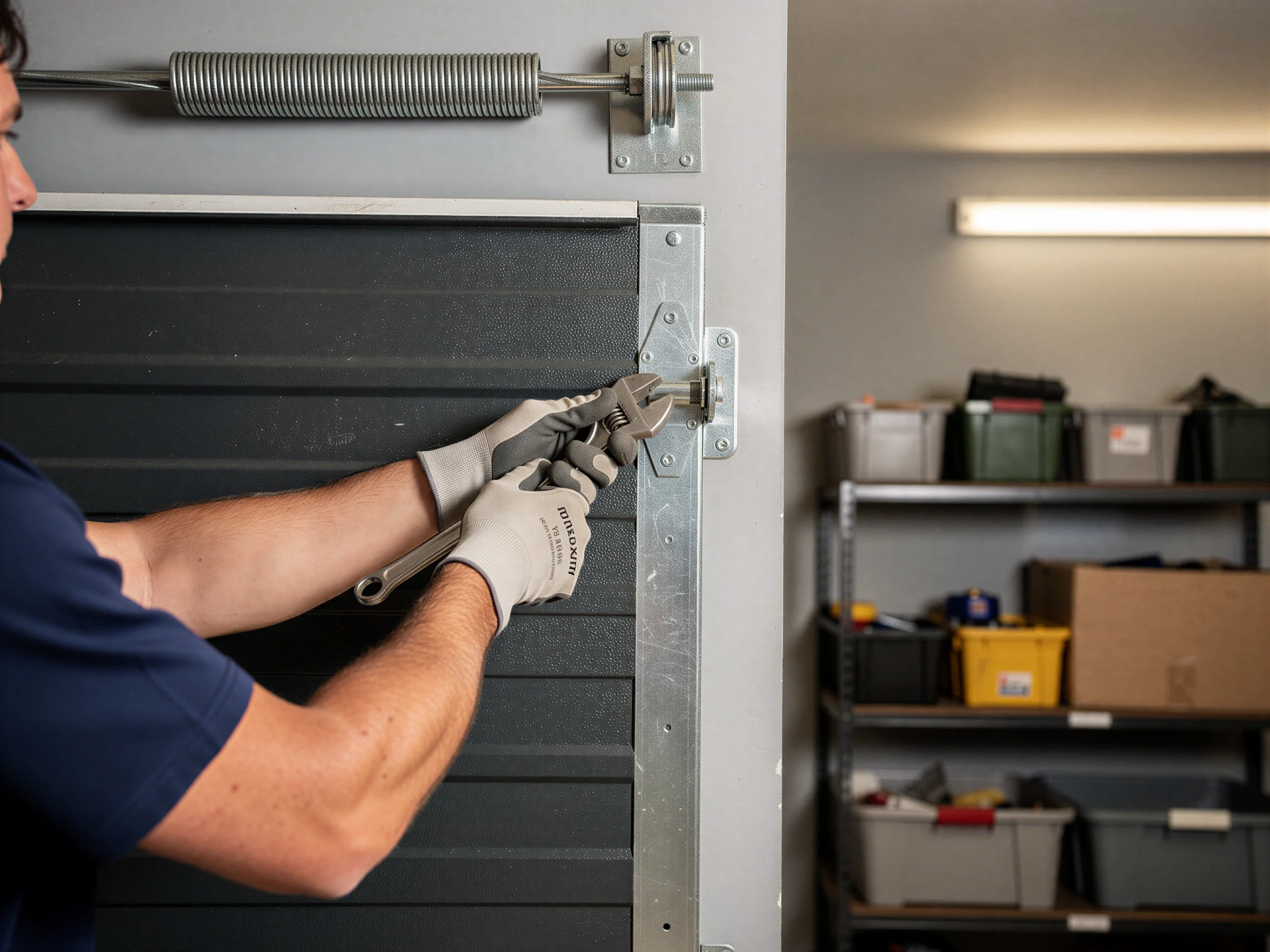
WD-40 masking spring wear
We get calls where someone's sprayed WD-40 on everything for six months and the door still groans - because the squeak was never the issue, the spring tension dropping was.
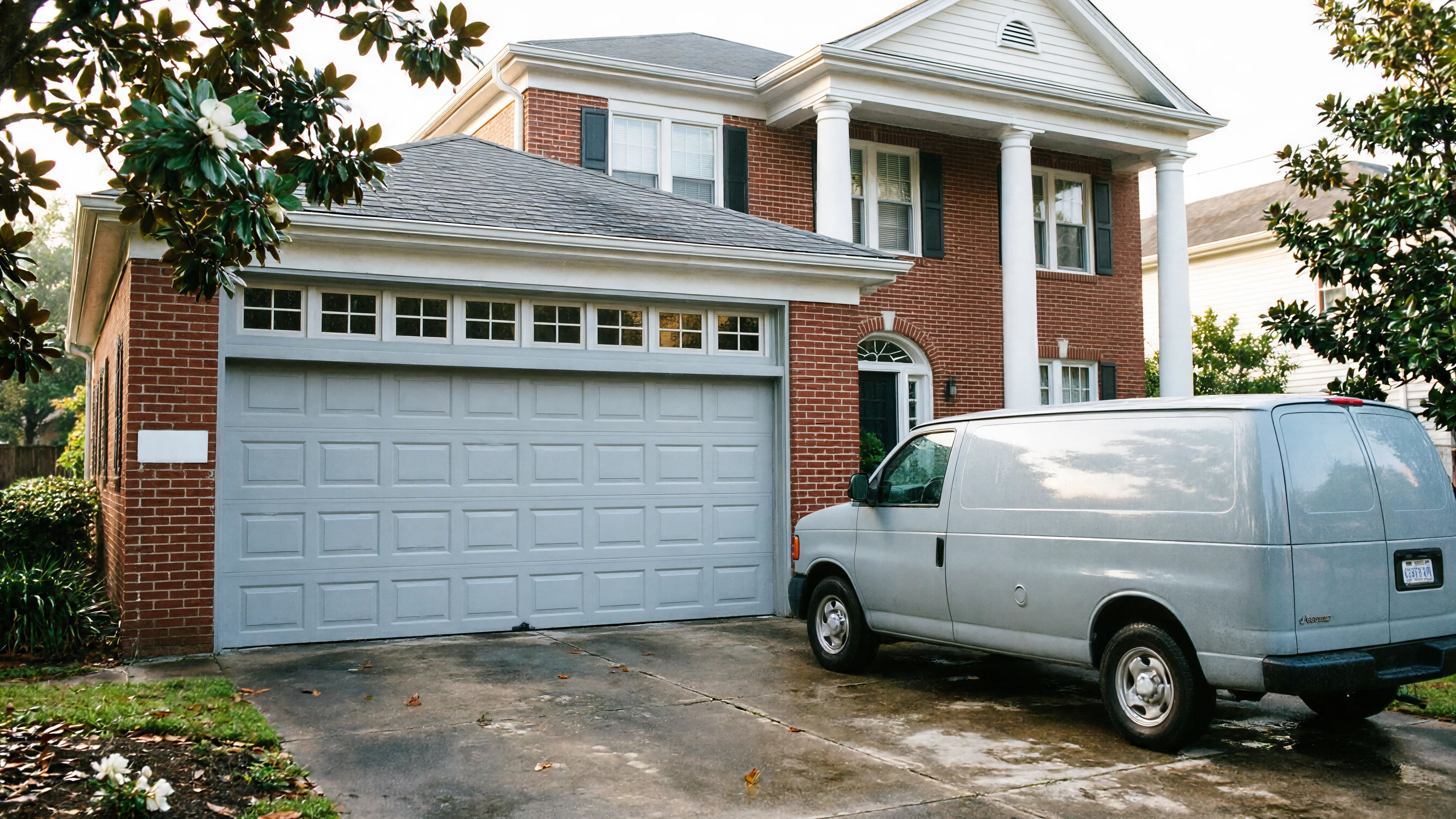
Wilmington, NC
Wilmington homes built between 1956 and 2008 are hitting the age where torsion springs and tracks give out. Here's why, and what to watch for before it fails.
Local causes
Most of the houses we get called to were built somewhere between 1956 and 2008, with a heavy concentration from the 1980s and 90s across the 22 neighborhoods we work in - places like Kings Grant, Silver Lake, and out toward Pine Valley Estates. That matters because a torsion spring is rated for a set number of open-close cycles, not a set number of years, and a door installed when a Magnolia Greens or Landfall subdivision first went up is now 25 to 40 years into daily use. On top of the age, Wilmington sits in a mild climate with occasional freeze snaps, which doesn't sound rough compared to the mountains, but the swing between humid salt air off the coast and a cold night a few times a winter is exactly what corrodes galvanized spring coils from the inside out. You don't get the dry, stable air that lets original hardware last indefinitely. The spring doesn't announce it's tired - it just lets go one morning, usually on the coldest day of the stretch, because cold metal is less forgiving under tension. Houses closer to the water feel this faster than ones further inland.
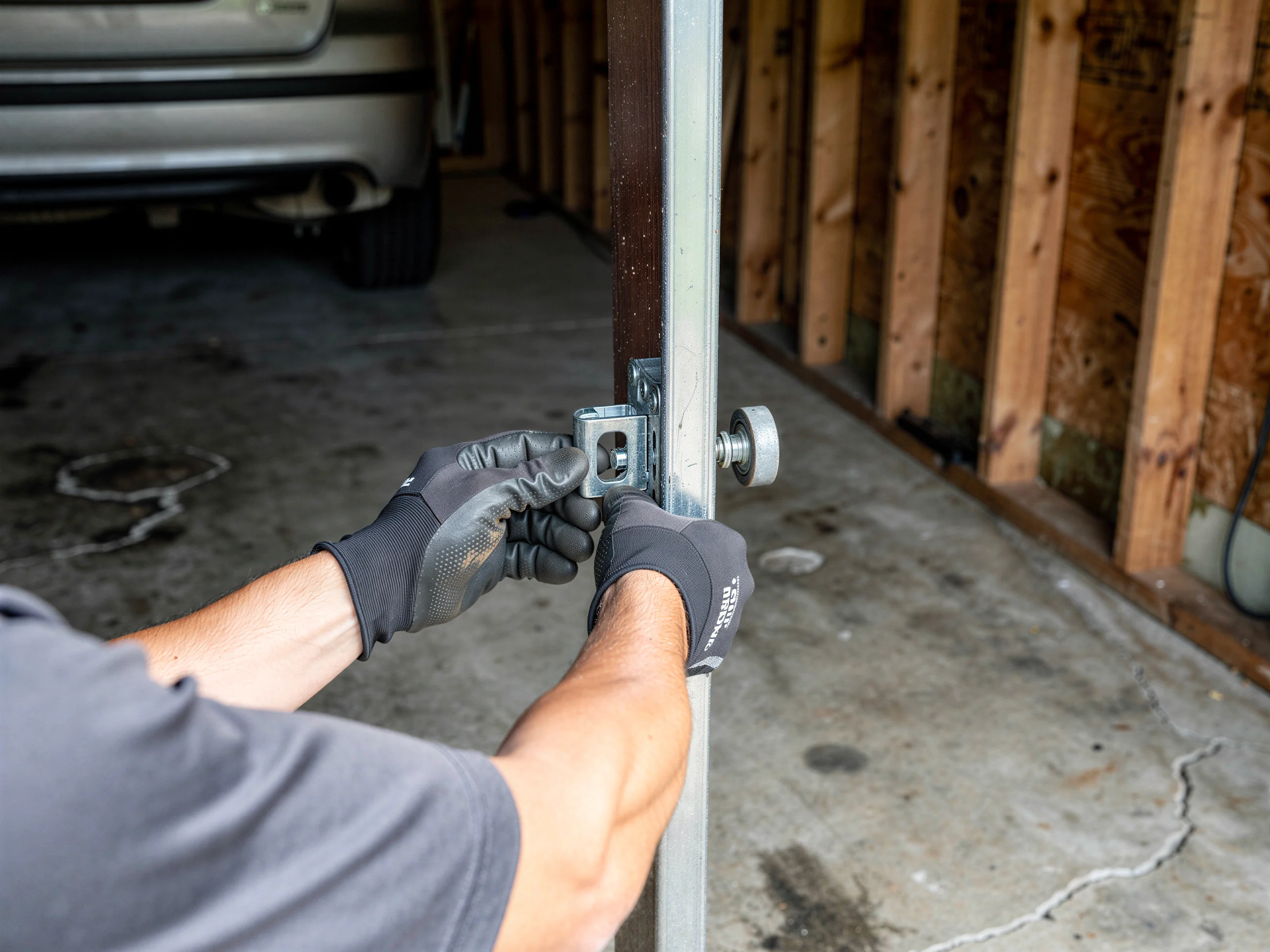
Watch-outs
The common mistake is treating a noisy or slow door as a lubrication problem when it's actually a spring near the end of its life.
We get calls where someone's sprayed WD-40 on everything for six months and the door still groans - because the squeak was never the issue, the spring tension dropping was.
On the builder-grade doors common in the 1980s-90s stock around here, the springs and the track brackets were sized to code at the time, not to today's heavier insulated panels some owners swap in during a renovation. Put a heavier door on original hardware and you've shortened its remaining life by years without knowing it.
Another place this goes sideways: a cable frays near the bottom bracket and someone tries to free a jammed door by forcing the opener, which bends the track instead of fixing the cable. We don't recommend forcing anything with an opener when a door is stuck. That's usually the difference between a $200 repair and a full track replacement.
Warning signs
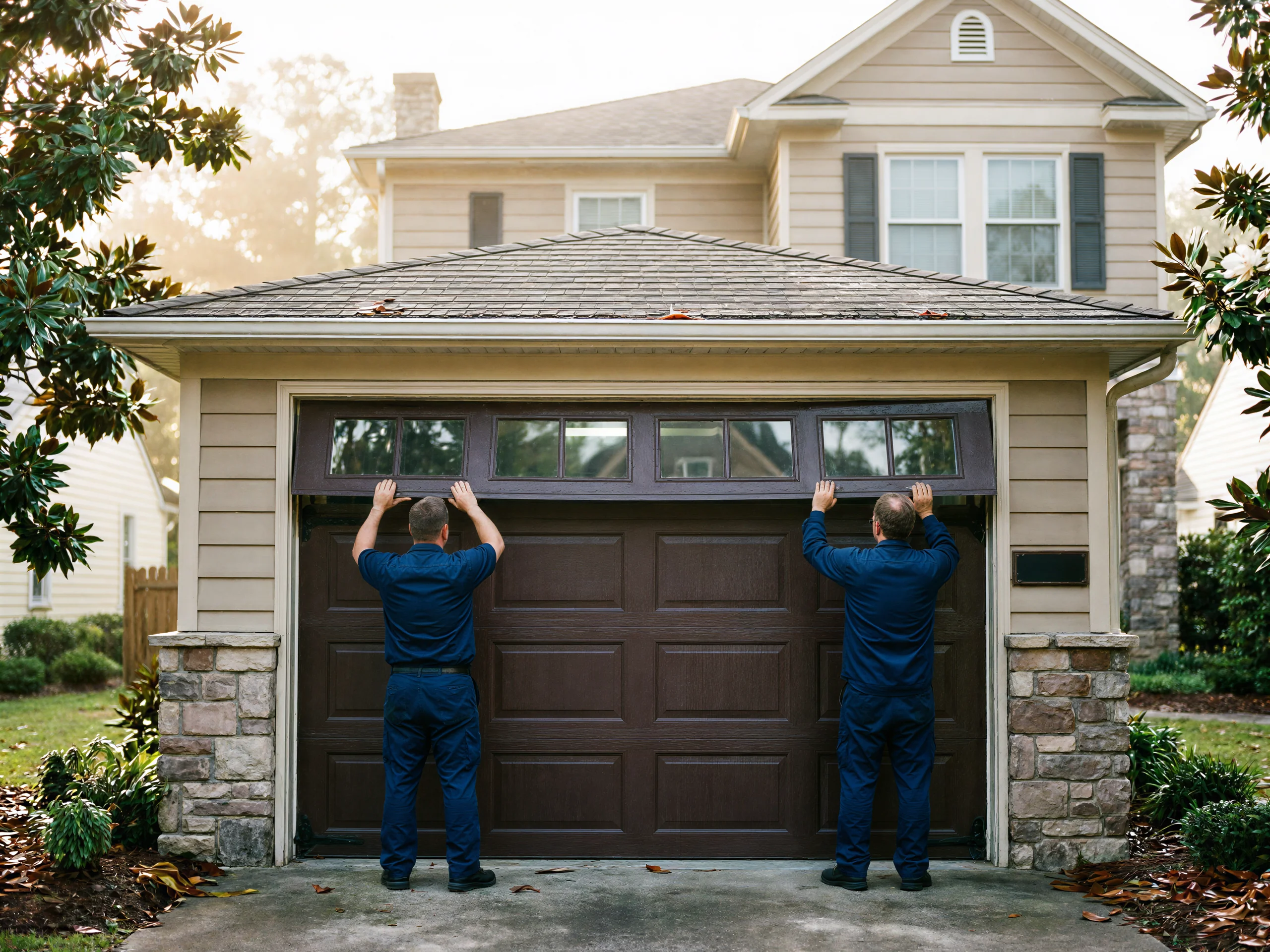
The first sign is rarely a dramatic snap. It's the door starting to close crooked, one side dropping faster than the other, because the spring on that side has lost tension while its twin hasn't failed yet.
You might hear a loud bang from the garage - that's a spring letting go, and it's loud enough that neighbors on a quiet street near Bayshore or Hightsville notice it.
Rollers in homes near the water tend to show pitting and rust a few years before the same part would in a drier inland spot, so a door that's fine in Rocky Point might already be sticking in a house five miles closer to the coast.
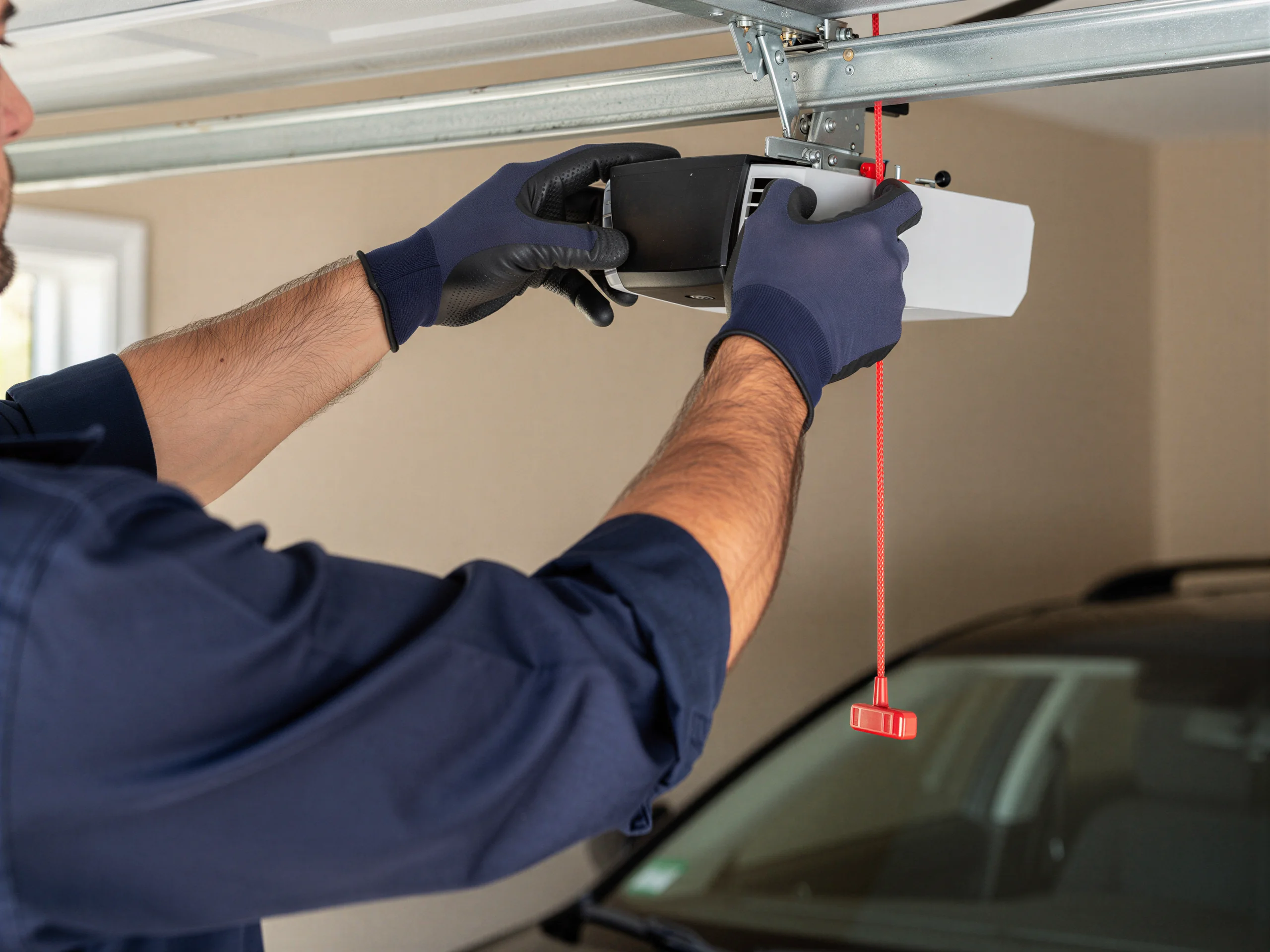
You may also notice the opener straining - grinding, slower lift, or stopping partway - because the opener motor is trying to compensate for a spring that's no longer doing its share of the lifting. None of these are emergencies the first time they happen. They are a countdown.
DIY or pro
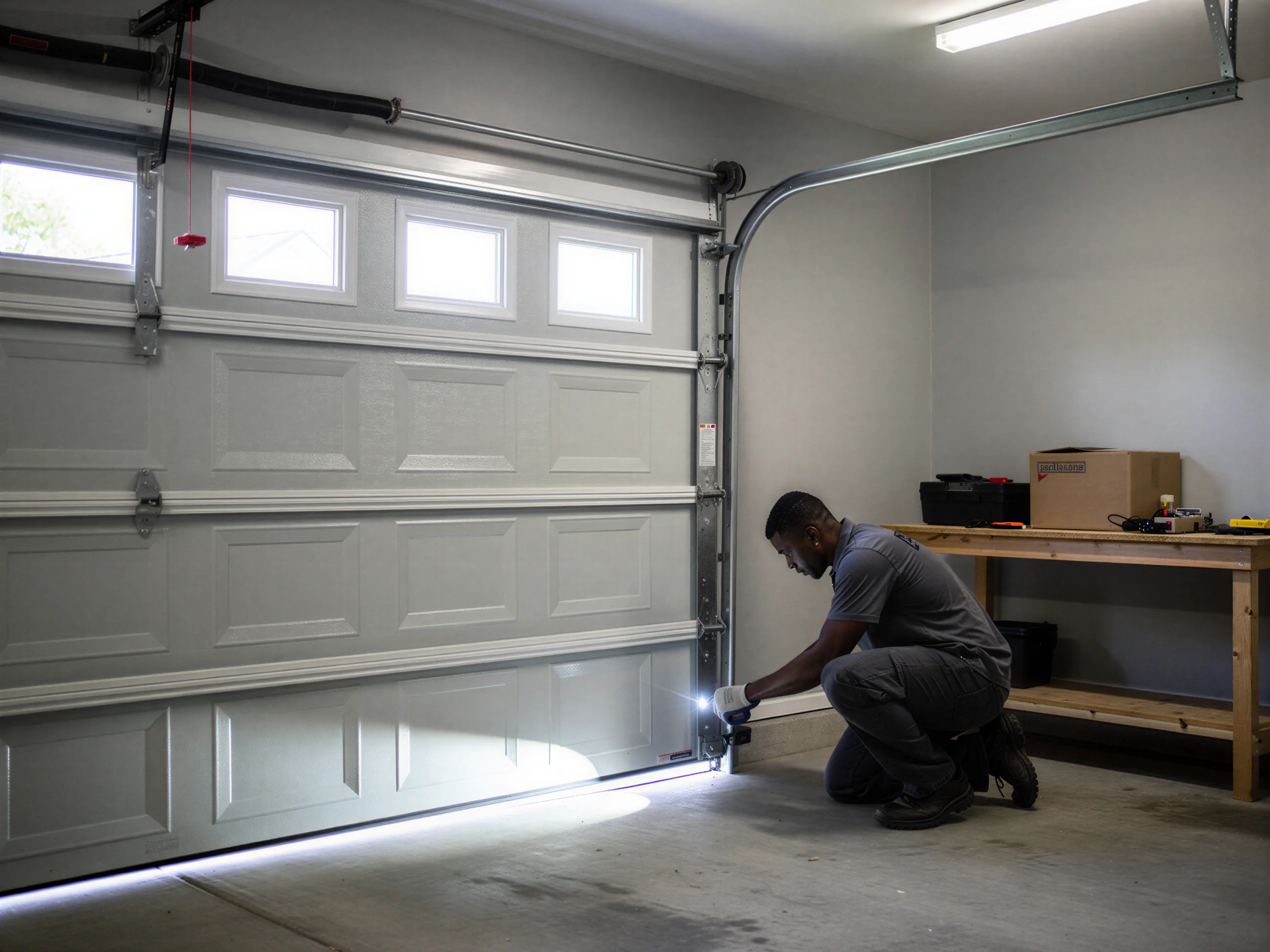
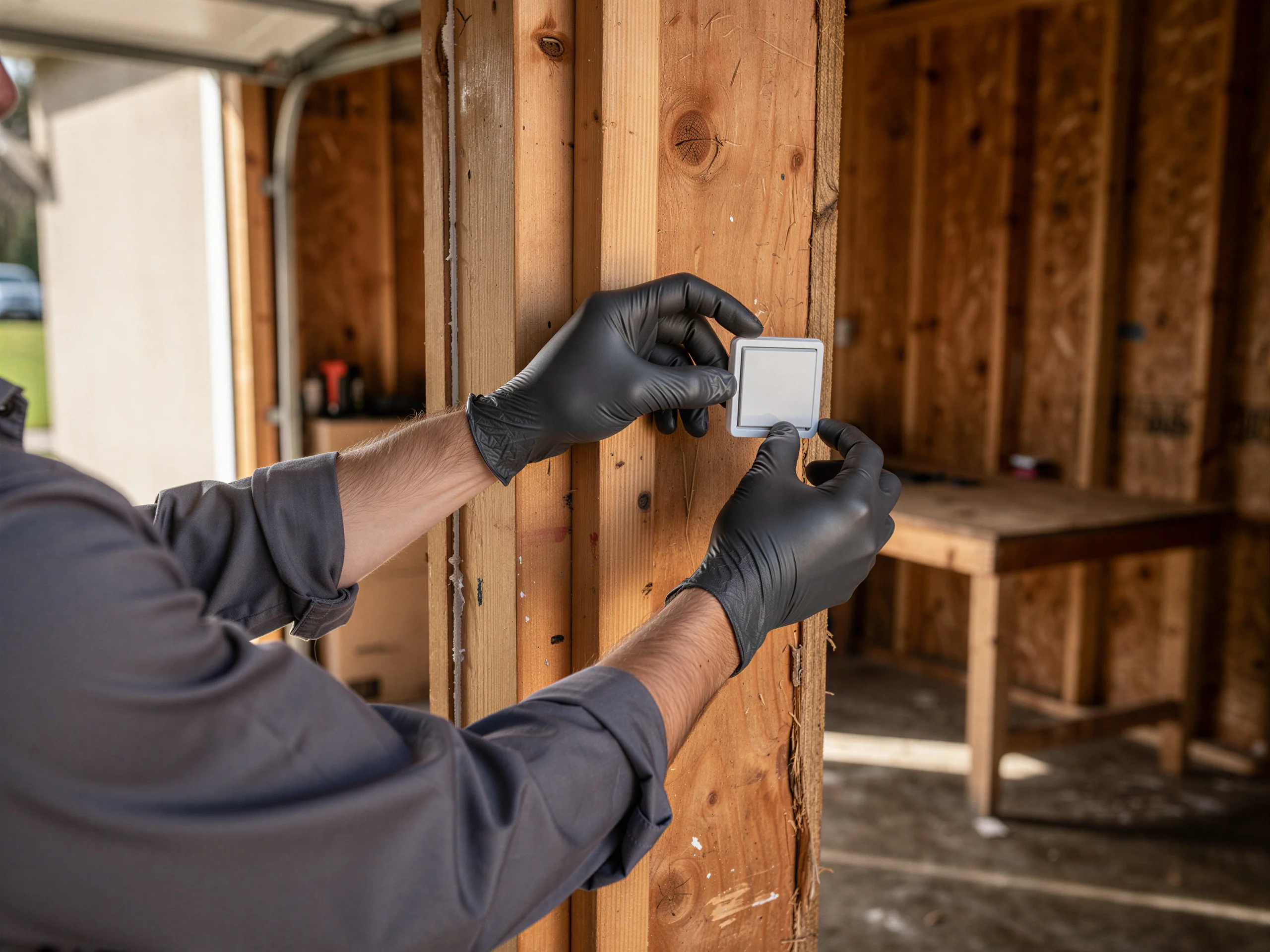
There's real DIY territory here: tightening loose hardware, cleaning and lubricating tracks and rollers, checking that photo-eye sensors are aligned, and replacing weatherstripping along the bottom panel.
All reasonable weekend jobs. Torsion springs are not. A standard torsion spring on a double door holds enough stored tension to cause serious injury if it's released wrong, and the tools for winding one safely aren't something most garages have lying around.
If your door is from the original builder install and you're in one of the older pockets of the 1956-2008 stock, replacing one spring without replacing its matching pair usually means a second failure within a year or two, since both springs age on the same clock even if one goes first.
Our honest limit: we don't recommend DIY spring replacement, full stop, and we don't carry every obscure discontinued panel size from the oldest homes in the service area - some of those take longer to source than a same-week repair.
Questions
The mix of coastal humidity and the occasional freeze snap we get in a mild climate band is harder on galvanized spring coils than a stable dry climate. Add in a lot of homes built in the 1980s and 90s now hitting the back half of a spring's cycle life, and failures cluster here more than you'd expect for a mild-weather town.
A loud door usually means something is wearing, not that it's about to fail today. But if the noise started suddenly and one side looks lower than the other when it closes, that's a spring losing tension, not just a lubrication issue, and it's worth a look before it fails completely.
You can, but we don't recommend it. Torsion springs are sold and aged in pairs, and the surviving spring on an older door is usually close behind the one that already failed. Replacing both at once costs less in the long run than a second service call a year later.
Cleaning tracks, tightening hardware, and checking sensor alignment are fine to do yourself. Winding or replacing a torsion spring is not - the stored tension can cause serious injury, and it's the one job on a garage door we tell every homeowner to leave to someone with the right bars and clamps.
Explore more
Ready when you are
Wilmington Garage Door Pros repairs and installs garage doors, springs and openers in Wilmington, NC and the surrounding area.