
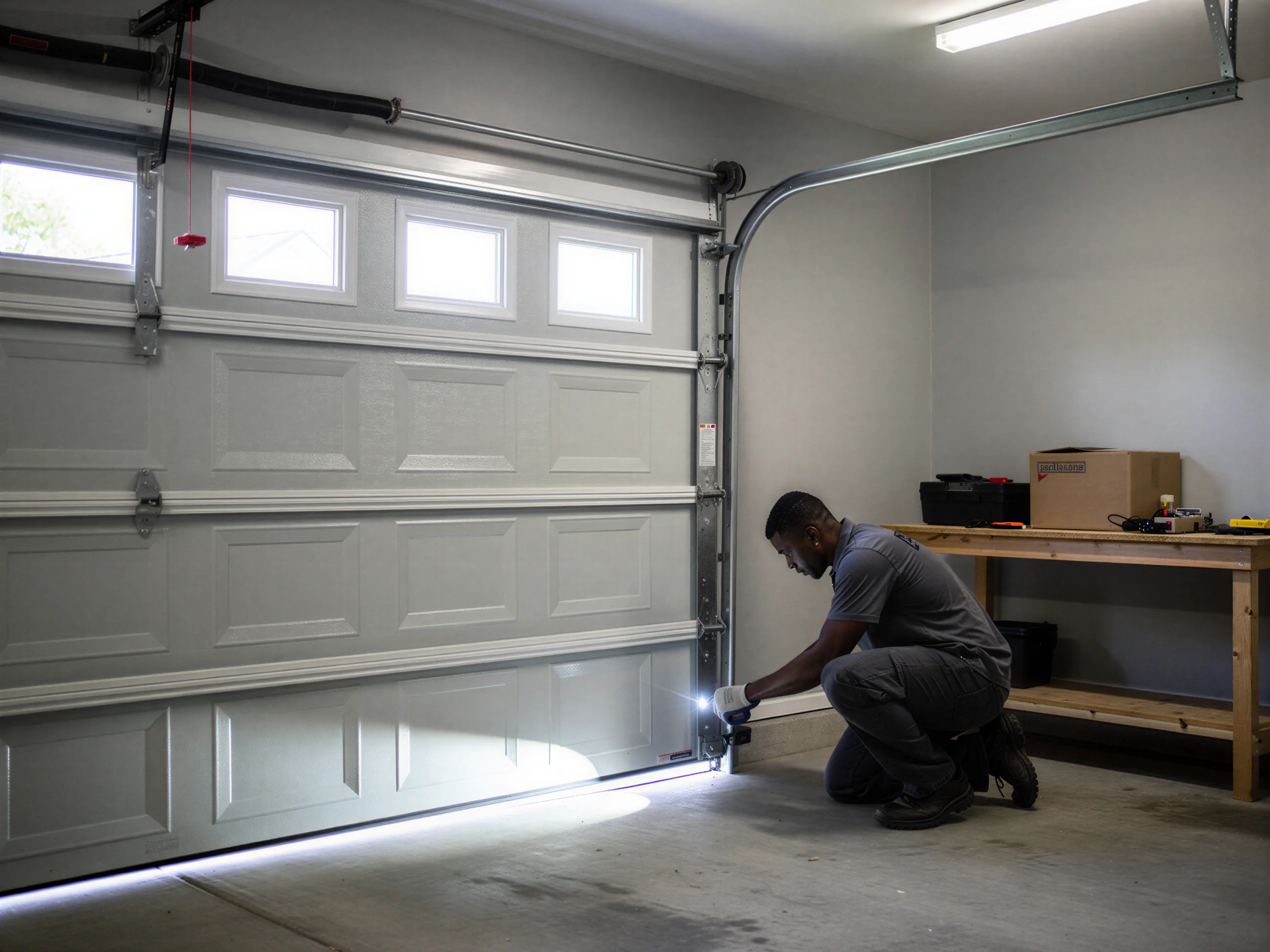
Track under spring load
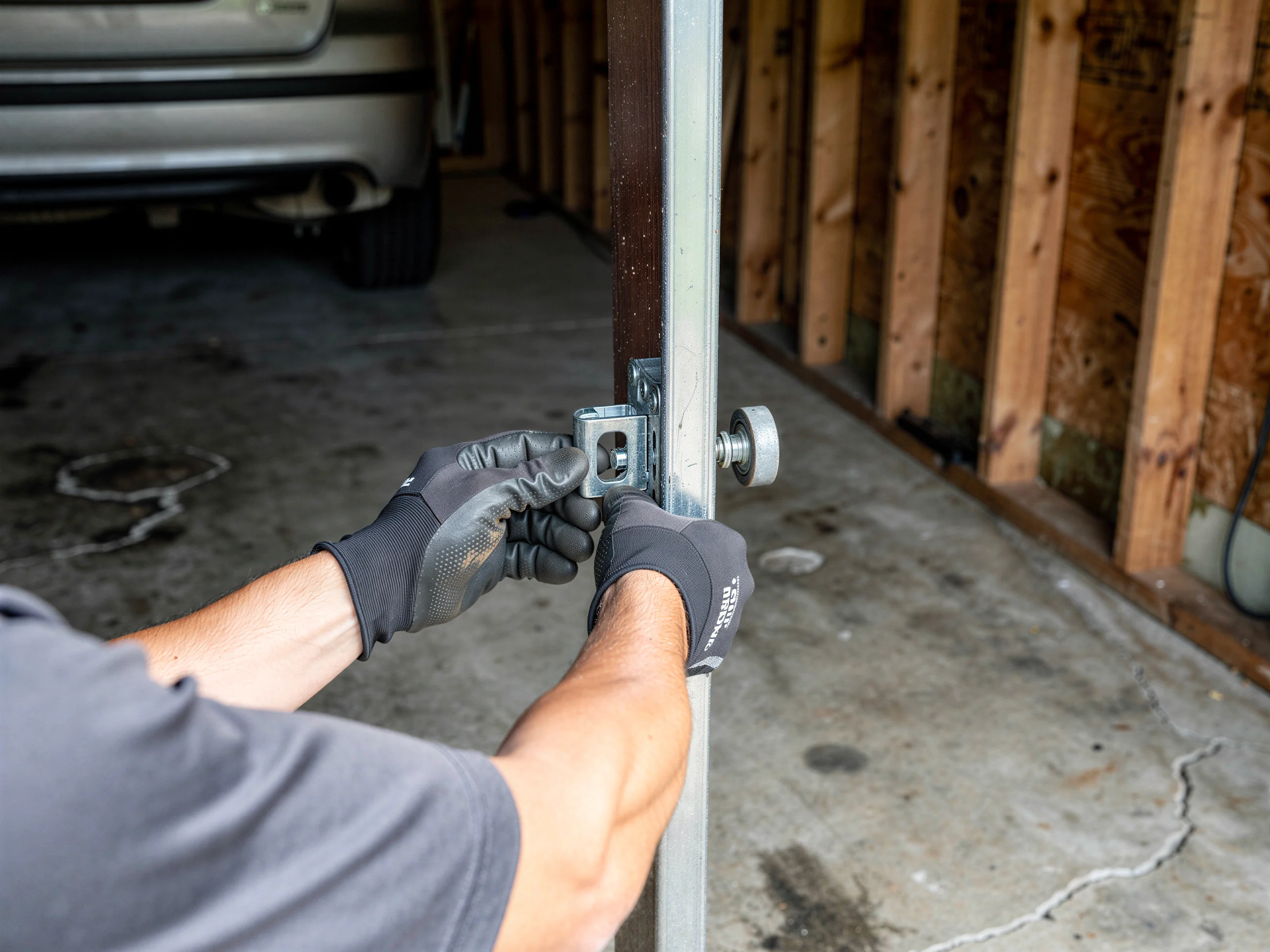
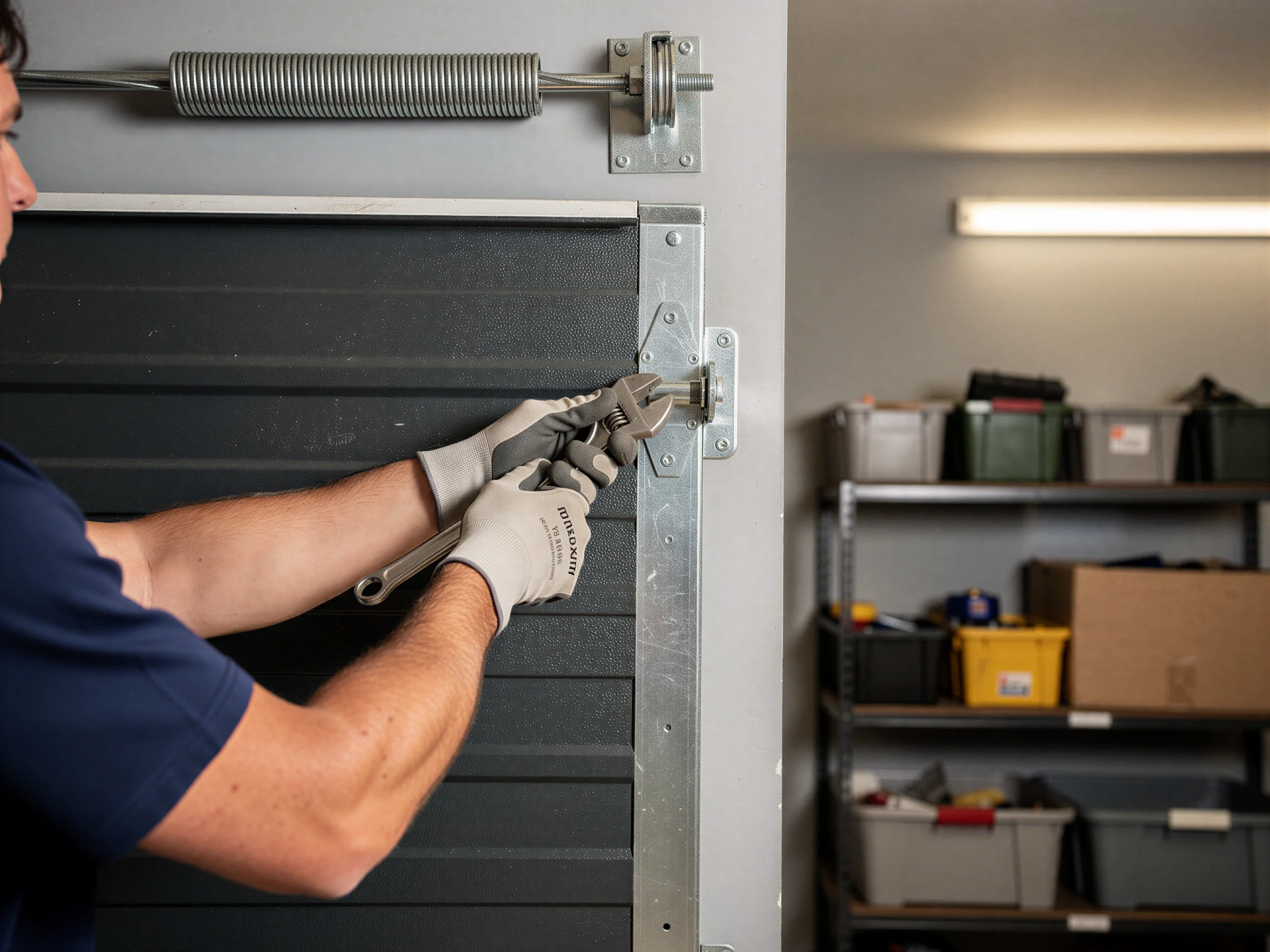
If the door is still under tension from a torsion or extension spring, that track is holding a load, and trying to muscle a panel back into a bent or misaligned rail can let the whole door drop or whip the cable loose.
Wilmington, NC
A door off its track isn't something to force back by hand. Here's why it happens so often in Wilmington's housing stock and climate, and what to do before you touch it.
Local causes
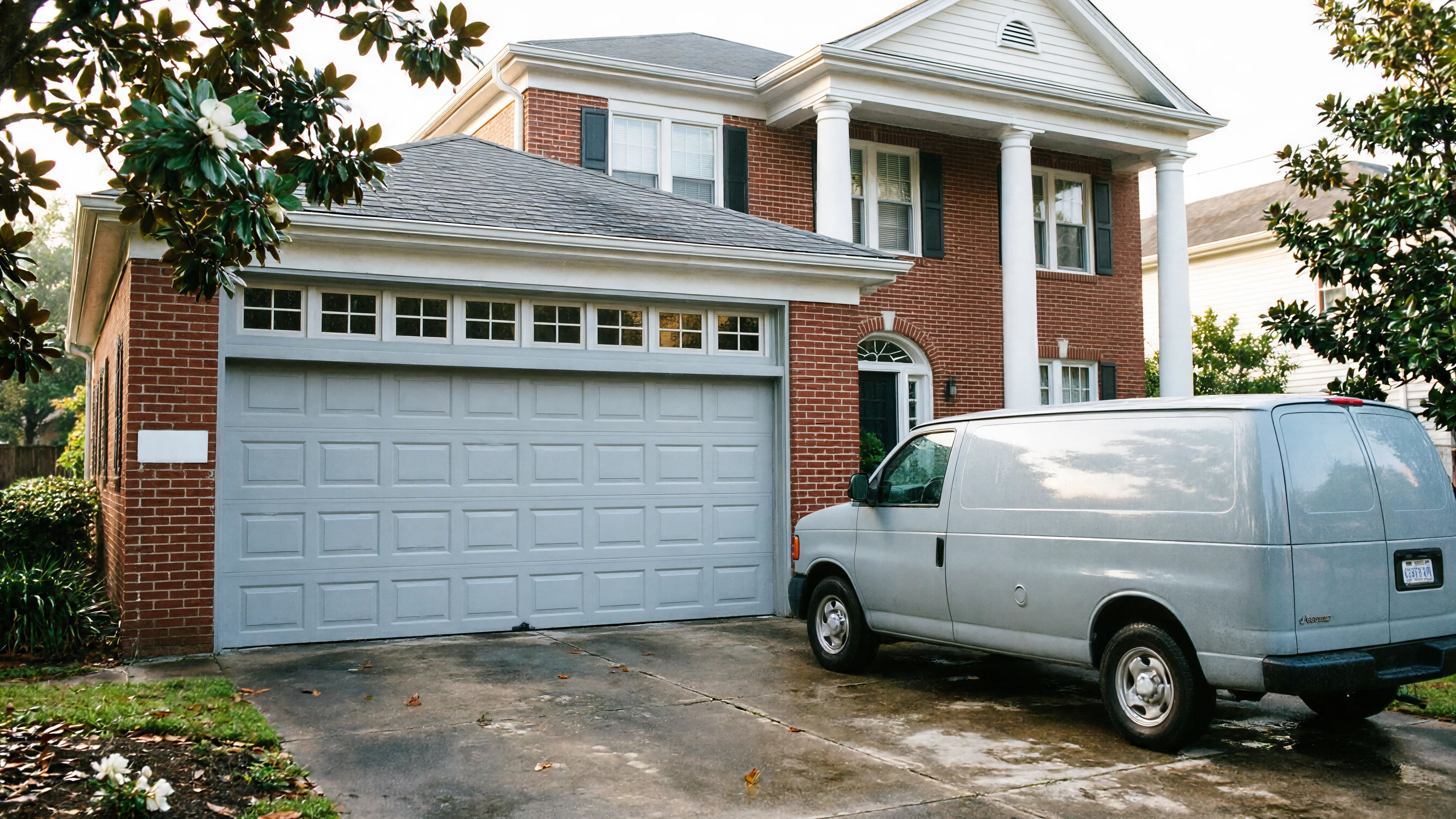
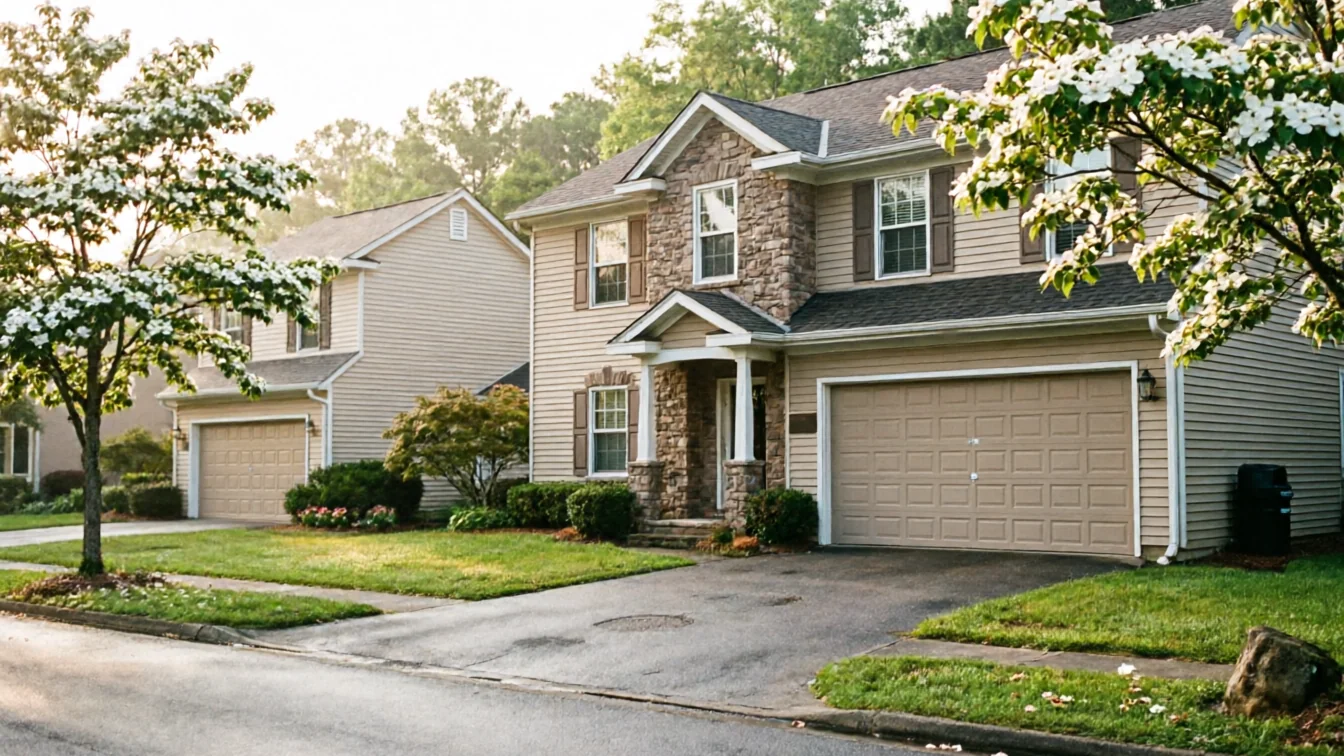
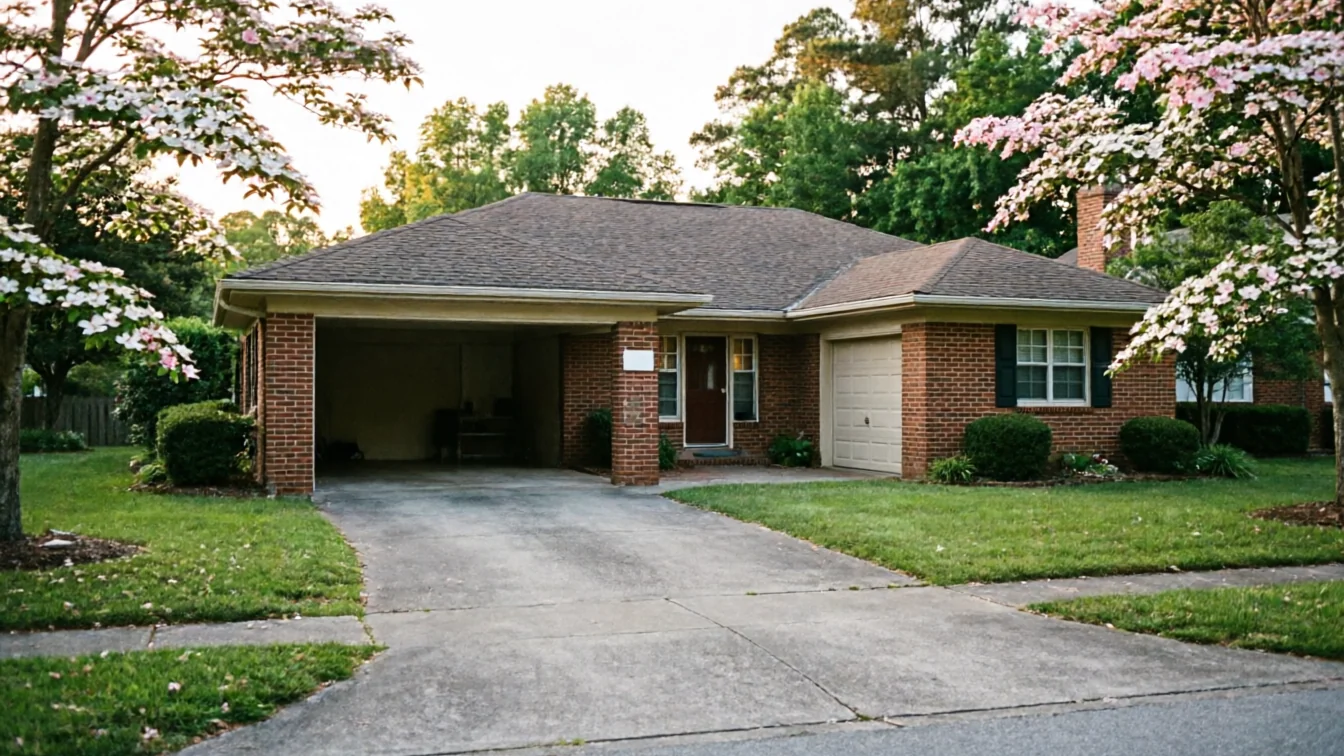
Most of the houses in this service area went up between 1956 and 2008, with the typical build year landing around 1994. That matters because a door coming off its track almost never happens out of nowhere - it's the end point of hardware that's been slowly giving up for years. A lot of what's out there is original builder-grade steel track, still hanging on the same lag screws from whenever the house went up.
Across the 22 named areas in this service area, most of the housing stock dates to the 1980s and 90s, a stretch when builders leaned on lighter-gauge track and stamped roller brackets. That hardware holds up fine for a long time, but it bends and loosens more easily than what gets installed on a new door today. Add in a climate that's mild but still cycles through freezes, and you get steel that expands and contracts enough, winter after winter, to work mounting bolts loose at the jamb. Once a bracket shifts even a little, the rollers start riding the edge of the track instead of the center, and it's only a matter of time before one jumps clean off.
Watch-outs
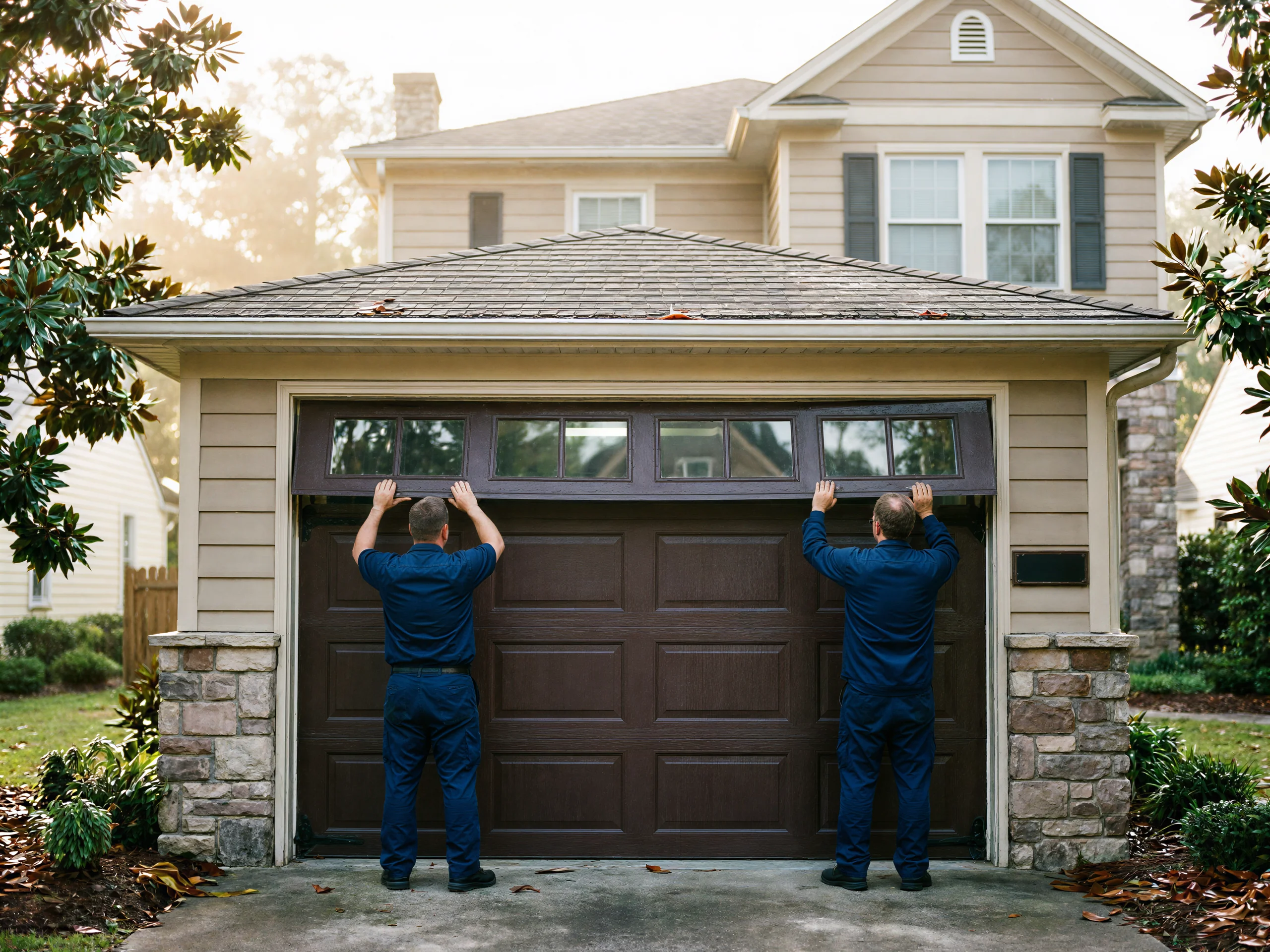
The job looks simple from the floor: door's hanging crooked, rollers are out of the track, just lift it back in. The complication is almost always the spring.
If the door is still under tension from a torsion or extension spring, that track is holding a load, and trying to muscle a panel back into a bent or misaligned rail can let the whole door drop or whip the cable loose.
The other place it goes sideways is hardware mismatch. On a lot of the 1980s and 90s builds common across this area, the track brackets are an older gauge and spacing that newer replacement rollers and hinges don't always seat into cleanly.
A fix that looks finished can still ride rough or pop back off the track within a few weeks if the bracket itself got bent in the original failure and never got straightened or swapped. We don't carry every discontinued bracket size in the truck, and sometimes the honest call is to replace a short section of track rather than chase a match for something a builder stopped making years ago.
Warning signs
Usually it starts quiet. The door sticks a little on its way up, or one side seems to lag behind the other by an inch or two. You might hear a grinding or popping sound from a roller that's riding the lip of the track instead of sitting in the channel. Sometimes a corner of the bottom panel visibly tilts away from the frame when the door is halfway open.
In the worse cases, the door stops mid-travel and won't move at all, or it comes down crooked and jams against the track on one side. If a roller has fully come out, you'll often see a gap between the track and the wall bracket, or the track itself bowed outward where the bracket pulled loose from the jamb. Any of these signs mean the door is no longer riding true, even if it still opens and closes most of the way.
DIY or pro
If the door is light, unpowered, and clearly off at just one roller near the bottom, some owners can walk the roller back into the channel by hand with the door fully down and the opener disconnected. That's about the limit of what's safe to try without the right tools.
What you shouldn't do is force a door back into track while it's under spring tension, or keep running the opener against resistance hoping it'll work itself free - that's how a track bends further or a cable snaps. If the track is visibly bent, a bracket has pulled away from the wall, or the door won't budge, that's a call, not a project. We'd rather tell you it's a twenty-minute fix than let you find out the hard way that it wasn't.
Questions
That usually means a bent section of track or a loose bracket at that exact point, not a one-time accident. Once a rail is bent even slightly, the roller hits that spot and jumps every time the door passes it. Straightening track rarely holds for good - replacing the bent section is the more lasting fix.
No. A door that's off track can drop unevenly or bind partway through its travel, and a door moving unpredictably over a vehicle is a real risk. Leave it down, disconnect the opener if you can do so safely, and don't run it again until someone's looked at the track and rollers.
On the older builder-grade hardware common in this area, it's usually the rollers wearing down first, which lets the door ride unevenly and eventually pull a bracket loose. By the time the track itself is bent, it's often because a worn roller caused it, not the other way around.
Explore more
Ready when you are
Wilmington Garage Door Pros repairs and installs garage doors, springs and openers in Wilmington, NC and the surrounding area.