What Is Going On
Most of the housing in this service area went up between 1956 and 2008, with the median build year landing at 1994. Across the 22 named areas we work - places like Kings Grant, Silver Lake, Wrightsboro, and Pine Valley Estates - the bulk of that stock is from the 1980s and 90s. That matters because a door is not a standalone part. It is a system: panels, hinges, rollers, a torsion or extension spring, cables, and an opener, all sized and matched to whatever was standard the year the house was framed. A door from a 1985 build in Hightsville or Bayshore is going to have different spring wind, different track depth, and often a different opener mount than something put up in 2005 near Belville or Ogden. When a homeowner calls about a door that is "just old," the first question we ask is roughly what decade the house went up, because that tells us more than the symptom does. A door that is stiff, noisy, or slow to respond is not automatically a door that needs replacing. Often it is a spring at the end of its cycle life, or an opener board that has simply outlived its gears, on a door that is structurally fine.
What It Costs
We do not have a price list to hand you here, and we are not going to make one up. What we can tell you is how the decision usually gets made. A worn spring, a bent roller, a failing opener logic board, or a misaligned track are repairs - they fix a specific failed part on a door that otherwise still works. Full replacement gets considered when the door panels themselves are rusted through, delaminating, or so out of square that hardware keeps failing on a cycle. With a median household income of $73,072 across the area, most owners here can afford either path, but that does not mean replacement is the right call just because it is affordable. If the opener and track are sound and only the spring has gone, replacing the whole door is money spent on parts that did not fail. Our honest limit: we do not carry stock for every discontinued panel style from the 1980s and 90s builds common in this area, so on some older doors a close color or profile match on a single replacement panel is not something we can promise.
What the Weather Here Does to It
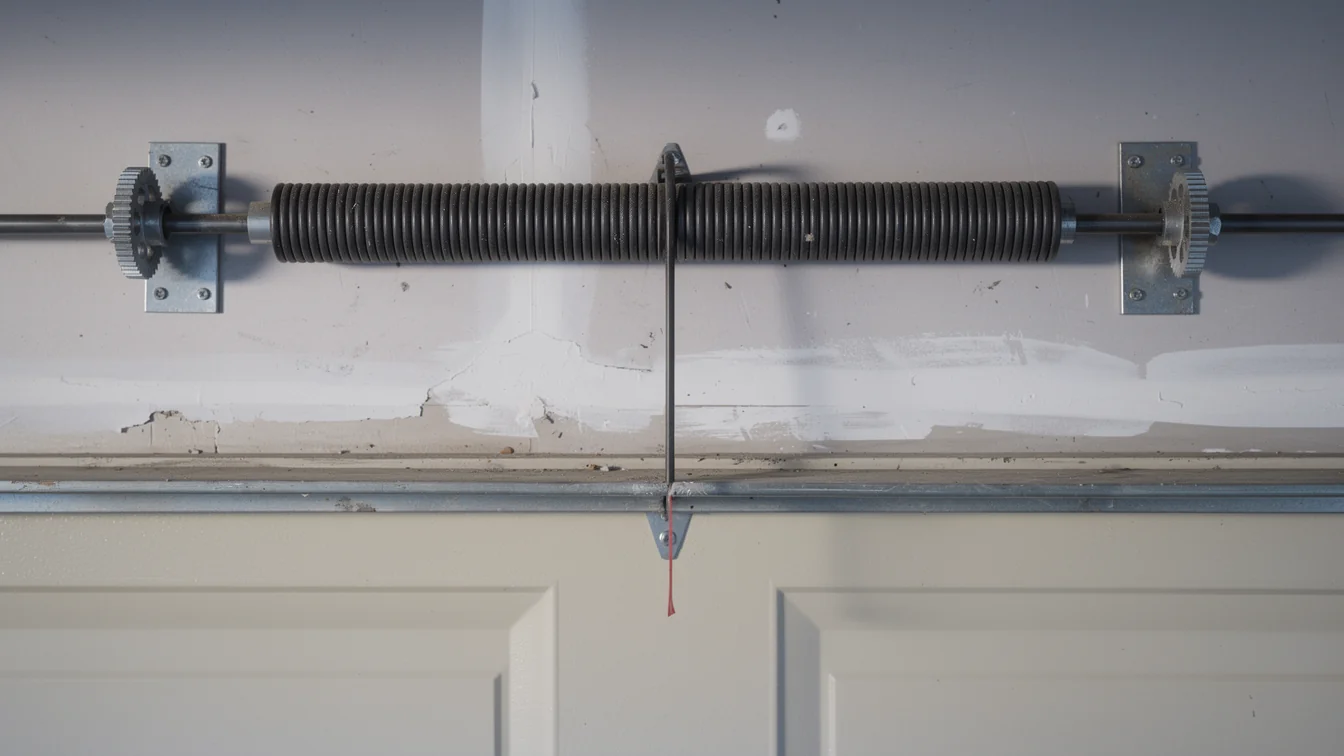
This area sits in a mild climate band with occasional freezes, not the deep freeze-thaw cycling that cracks concrete footings and warps steel tracks further inland. That is good news for the metal components - springs and tracks here are not fighting the same expansion and contraction stress year-round. What does wear on an older door in this climate is humidity. Doors built in the 1980s and 90s, when a lot of this area's stock went up, often used steel hardware without the corrosion coatings that are standard now, and years of damp air cycling through an unconditioned garage will rust a spring's coils or seize a hinge pin well before the door's panels show any wear. On a door that old, we will often find the opener and panels in fine shape while the spring and roller hardware are the actual failure point. That is a repair, not a replacement, and it is the single most common call we get on houses built in that era.
The Seasonal Bit
Because the freezes here are occasional rather than sustained, the seasonal pattern on older doors is less about ice jamming a track and more about a slow buildup of surface rust finally giving out. We see it most on doors original to houses built before the 1994 median - the spring that has been fine for a decade suddenly snaps on a cold morning, not because the cold broke it but because the cold was the final stress on hardware that was already near the end of its wind cycle. If your door is original to a house built in that 1956-2008 range and you have not had the spring or rollers looked at, a seasonal check before the colder stretch is worth more than waiting for it to fail with the car still inside. That is a cheap visit next to a dead spring at 6 a.m. on a work day.
Talk to a local pro
Garage door trouble in Wilmington?
Same-day service with honest, upfront quotes.